Tag: nutrition

  • One Tablespoon In, Twenty-Three to Go

    One Tablespoon In, Twenty-Three to Go

    For those who may have missed my blog post Meal Plan Mayhem: Recipes, Reminders, and a Big Jar of Tahini , let me catch you up.

    It started with a meal plan. A well-meaning, overly ambitious, totally Pinterest-board-worthy meal plan that promised five nights of dinner magic. One of those meals called for a tablespoon of tahini. And because I was riding high on optimism and possibly a little hungry while grocery shopping, I ended up with a 24 oz jar of it.

    For those doing the math at home:
    1 tablespoon = 0.5 oz
    Which means I had 23.5 ounces of sesame paste staring at me every time I opened the fridge, mocking me with its smug, oily grin.

    Clearly, I had two choices:

    1. Accept that this would now be my emotional support condiment.
    2. Figure out how to use it in literally anything other than hummus (or, let’s be honest, in addition to hummus).

    When Life Hands You Lemons… and a Bucket of Tahini

    First up, I asked AI for a lemon-tahini chicken marinade. Because that sounded like something a person with a vat of tahini might do. I had chicken, I had lemons, I had a dream. The first version came back thick enough to spackle drywall — delicious, but not exactly marinade material. I had to thin it out with water or oil. Also? Salty. Like, why is this so salty? salty.

    I went back to the drawing board — or rather, back to the chat — and said, “Hey AI, this is way too thick, what gives?” AI, bless its helpful little code-heart (if you’re from the South, you’ll understand my meaning), suggested thinning with water or lemon juice and balancing the salt with a little maple syrup. It worked. I had a marinade. And it was actually good.

    Now, have I used this marinade on every piece of protein in my fridge? Yes.
    Had I still only used maybe two more tablespoons of tahini? Also yes.

    Beyond Basic Hummus

    Next idea: hummus. I know, I know. It’s the obvious tahini solution. But I wasn’t about to go basic on this one. If I was going to dip into this jar again (literally and emotionally), it had to feel fun. So I asked AI for some variations: it gave me roasted red pepper, spicy jalapeño, lemon garlic, herb… even beet hummus, which I politely declined because it sounds like something a woodland fairy eats.

    I landed on roasted red pepper hummus and — spoiler alert — it was delicious. Smooth, rich, and just enough bite to make it feel like an upgrade from the store-bought stuff. Even better, I used it in a Mediterranean-themed dinner that included:

    • Grilled lemon-herb chicken thighs
    • Quinoa with roasted veggies
    • And yes, another two tablespoons of tahini

    We were making progress. Slowly. Like, teaspoon-at-a-time kind of progress.

    A New Culinary Era (or: How Tahini Took Over Our Life)

    We’ve officially entered the “put tahini in everything” phase of our lives. Not because we’re trying to be trendy, but because the jar expires in 2 months. And, surprisingly, it’s working. The more we cook this way, the more we’re falling in love with the Mediterranean food vibe — so much so that we’ve begun casually daydreaming about running off to a remote Greek island, eating hummus and olives on a breezy veranda, and living the feta-fueled fantasy.

    Realistically, we’re still here, still in the kitchen, still trying to use up the jar. But at least now there’s a theme.

    I’ve added tahini to:

    • Salad dressings (good!)
    • Veggie dips (fine!)
    • A chicken marinade that’s really good( when it’s not pasty and salty)

    The takeaway? Tahini is shockingly versatile… when you’re desperate.
    And AI? Surprisingly helpful — once you figure out how to ask the right questions like:

    • “How do I thin this before I glue my chicken to the pan?”
    • “Is this supposed to taste like sesame salt paste or am I doing it wrong?”
    • “What can I make with tahini that won’t make my family mutiny?”

    Final Thoughts: Is There a Support Group for This?

    I’m not mad about the tahini anymore. I’ve embraced it. I’ve bonded with it. It’s a character in my kitchen now — just me, my cutting board, and a jar that refuses to empty.

    And thanks to AI, what started as a condiment crisis has turned into an adventure in flavor, creativity, and asking a lot of follow-up questions. If you’ve ever found yourself holding an ingredient and thinking, what in the world do I do with this now, just know: you’re not alone. And with the right prompt, dinner might just surprise you.

    Unless it’s beet hummus. You’re on your own with that one.

    If you’ve got a great recipe that uses Tahini, I’m all ears, please leave it in the comments or send me an email!

  • Sneaky Suppers for the Real World: Hiding Veggies, Dodging Tantrums, and Winning Dinner (Mostly)

    Sneaky Suppers for the Real World: Hiding Veggies, Dodging Tantrums, and Winning Dinner (Mostly)

    I recently got some reader feedback.
    (Translation: my daughter called me out.)

    She told me that while my AI cooking adventures are fun and all, not everyone is out here trying to spiralize zucchini and soak organic chickpeas. Some people are just trying to feed a first grader something—anything—other than chicken nuggets, mac & cheese, or those little pizza rolls that come out of the microwave hotter than lava.

    She also gently pointed out (with her usual sarcasm, which I clearly passed down like a family heirloom) that not everyone eats the way I do. Nuts, seeds, organic, no red meat… cool story, Mom—but some of us just want to know how to hide an onion in dinner without our child staging a full-scale rebellion.

    Fair. Very fair.
    And probably what a lot of parents are thinking while reading this.

    So let’s be clear: this post isn’t for the gluten-free, tahini-stirring, Pinterest-perfect version of yourself you see in your dreams. This one is for the version of you who has $20, a half-empty fridge, and a first grader who just declared he won’t eat “anything green or squishy or weird.”

    This one’s for the moms (and dads!) who shop tired, cook tired, eat standing up, and just want to feel like they didn’t totally lose the dinner battle tonight.

    The Dinner Dilemma: Real Life Edition

    Let’s talk about my grandson for a second. When he came to visit, his preferred menu was a sacred trifecta of:

    • Mac & cheese
    • Pizza rolls
    • Chicken nuggets

    That’s it. He said it with the confidence of a seasoned diner reading off the chef’s specials.

    So when my daughter asked me, “How do I get this child to eat something remotely healthy without him knowing it’s healthy?” First, I had to chuckle to myself “hello karma, so nice for you to come back around!” but, I knew she wasn’t alone. That’s a real challenge for a lot of parents. She also wanted to know things like:

    • “How do I add onions to dinner without him noticing?”
    • “What’s something fast I can make with a tiny budget that still feels like a meal?”
    • “Can AI help with this or is it only for people who own a spiralizer?”

    And yes, my daughter eats very differently than I do. She’s not going to whip up almond flour muffins or swap pasta for cauliflower. She’s using pre-made sauces, red meat, and gluten—and she needs ideas that work in that world. Realistic. Fast. Familiar. Picky-eater-proof. That’s the vibe.

    “I’m not buying weird ingredients, okay?”

    Prompt:

    “Give me easy dinner ideas with minimal prep, no weird ingredients, and foods my picky kid will eat. Use jarred sauce or prepackaged shortcuts if needed. Prioritize speed and familiarity, but sneak in something a little healthy.”

    What you’ll get:
    Think spaghetti with a jarred sauce that hides pureed veggies. Sloppy joes with ground beef and finely chopped mushrooms. Tacos with cheese and beans mashed into the meat. Pasta bake with some frozen spinach that disappears in the layers. Comfort food, but with a twist your kid might not notice.

    “I have $20 and no energy to think.”

    Prompt:

    “Give me a $20 grocery list and a fast dinner recipe for a picky eater and a meat-and-potatoes husband. I want it to feel like real food, but be easy to make and sneak in something healthy without anyone noticing.”

    This one could result in:

    • Rotini pasta, ground beef, jarred marinara, and a hidden shredded zucchini.
    • Chicken quesadillas with canned black beans and finely chopped bell peppers.
    • Hamburger helper-style skillet meals with added frozen veggies and a little grated cheese on top for good measure.

    “How do I add onions without getting caught?”

    Prompt:

    “How do I sneak onions into a meal without my kid tasting or seeing them?”

    Ideas include:

    • Grating onions instead of chopping
    • Cooking them until soft and mixing into sauce
    • Adding onion powder instead of real onions
    • Using premade sauces that already have blended onions in the base

    Bonus tip: if your kid already trusts a certain meal (like spaghetti), that’s the place to sneak stuff in—not something totally new.

    Final Thoughts: You’re Doing Fine

    Here’s the thing: no one is handing out trophies for healthiest dinner. You are not a failure because you didn’t make homemade soup stock or serve a rainbow of vegetables tonight.

    Using AI doesn’t mean you suddenly have to overhaul your family’s eating habits. It means you have a free, 24/7 brainstorming buddy that can meet you where you are. Even if that’s at the grocery store with 10 minutes to spare and a toddler asking why cookies aren’t a vegetable.

    Just like I tell my daughter—start with what you already know your kid (or your partner, or you) will eat, and build from there. Toss in something just a little bit better. Use the shortcuts. Use the pre-made sauce. Ask AI for help and keep what works.

    You’re not failing. You’re feeding people. That counts.

  • Five Nights, Zero Repeats: The AI Meal Plan That Almost Broke Me

    Five Nights, Zero Repeats: The AI Meal Plan That Almost Broke Me

    Remember when I said I was tired of trying to figure out what to make for dinner every night? Yeah. Me too. That version of me had no idea what she was about to get herself into when she decided to see if AI could come up with a meal plan.

    Once again, my AI-loving better half chimed in—this time after reading an article about someone who used AI to create not just a meal plan, but an entire grocery list. He looked at me and said, “You should give that a try.” In my head, I was thinking, Sheesh, how about they come cook it for me too?

    At first glance, it seemed like a dream: no thinking required, no endless Pinterest scrolling, no falling back on the same three meals I rotate through like a culinary Groundhog Day. I figured I’d just say, “Hey AI, make me a healthy dinner plan!” and boom—magic.

    Oh sweet, naive, past me.

    The Prompt Heard ‘Round the Kitchen

    I started with a simple enough request: five healthy dinners that met all the quirks and preferences of our family. To recap, we’re a gluten-free, organic-leaning, clean-eating household that avoids red meat and processed food like it’s the office microwave after someone reheats fish.

    Naturally, the AI came out swinging. It suggested things like a quinoa-stuffed bell pepper (love it), grilled lemon-herb chicken with roasted veggies (yes, please), and a chickpea & spinach curry with rice (Uhm, no, no curry please). Most everything sounded Pinterest-worthy… but there was just one issue: I had questions.

    The Feedback Loop That Became My Life

    The meal ideas were good—almost too good. But I quickly realized that for this to actually work, I had to get a little more specific. Like:

    • How long do these meals take?
    • Is this portion size going to feed my adult-sized household?
    • Can I bake these meatballs instead of pan-frying them because, hi, it’s summer in Arizona and turning on the stovetop feels like opening a portal to the sun?

    And then there were the moments AI got things… let’s say optimistically wrong.

    “Sure, you can roast those veggies in 10 minutes at 375°!”

    Can I though? Can I really? (Spoiler: no.)

    Or when a recipe for four magically became a meal for two. AI, honey, we are not rabbits delicately nibbling lettuce leaves in the garden. Give me a real portion.

    But every time I asked a follow-up question or poked a hole in the logic, AI came back with adjustments, corrections, or alternatives that actually worked. Sometimes, all it took was a clearer prompt: “Can I make this in the oven instead?” or “Give me a summer-friendly version of this meal.”

    The more I engaged, the more helpful it got.

    When the Plan Becomes Real (and Slightly Terrifying)

    Eventually, I had five full recipes that sounded amazing, were properly portioned, wouldn’t take 3 hours and could be cooked without me melting into the floor. The problem? I now had to cook all five of them. From scratch. After working all day. With ingredients I’d never used. In a week.

    Cue anxiety.

    I don’t know what I was thinking, really. Cooking one new recipe is a fun challenge. Cooking five back-to-back is a stress test. There’s the mental load of timing everything, the pressure of presenting something edible, and the looming possibility of the family taking one bite and reaching for cereal instead.

    And yet—somehow—it worked. Not flawlessly, but successfully. And I learned that:

    1. AI can build a solid, personalized meal plan—but only if you communicate clearly and ask the right questions.
    2. It’s okay to revise, adapt, and push back. Treat it like your friendly, slightly overeager sous chef.
    3. Next time, maybe space out the new meals a bit instead of pretending you’re auditioning for Top Chef: Overworked Edition.

    The Takeaway (No, Not the Takeout)

    Would I do it again? Probably. But with tweaks. Maybe one or two new meals a week, mixed with my own tried-and-true favorites. And maybe give myself a pep talk before diving in.

    But I’ve realized something important: AI isn’t just good for quick answers or resume edits. It’s incredibly helpful for people like me—people juggling dietary needs, tired taste buds, and decision fatigue. When you know how to use it (and aren’t afraid to push back), it becomes less of a robot and more of a kitchen buddy with a surprisingly decent grasp on garlic.

    Next Up: Let’s talk grocery lists—because yes, AI made one of those too. I’ll share how it went from helpful to how did I end up with this large bottle of tahini  and a quinoa supply worthy of a survival bunker? Plus, how I made it through all five meals without a single frozen veggie stir fry fallback. (Barely.)

    Pantry Prompt

    Not sure how to start a chat with AI about creating a meal plan? Here’s what I used as my first prompt:

    What are you able to do in regards to weekly meal planning, creating the recipes needed and grocery lists for the week?

    That was it, AI took it from there and the conversation started. Give it a try! But if you’re anything like me, maybe start with two or three meals.

  • You Can Just…Ask That?

    You Can Just…Ask That?

    When I first started using AI in the kitchen, I didn’t jump in with full meal plans or grocery lists. I started with the questions we all have in our heads but never say out loud because we feel like we should already know.

    Like, for example:
    What is this weird fruit, and how do I eat it?
    Or, more importantly:
    Will this potato kill me?

    It turns out, you can just ask that.

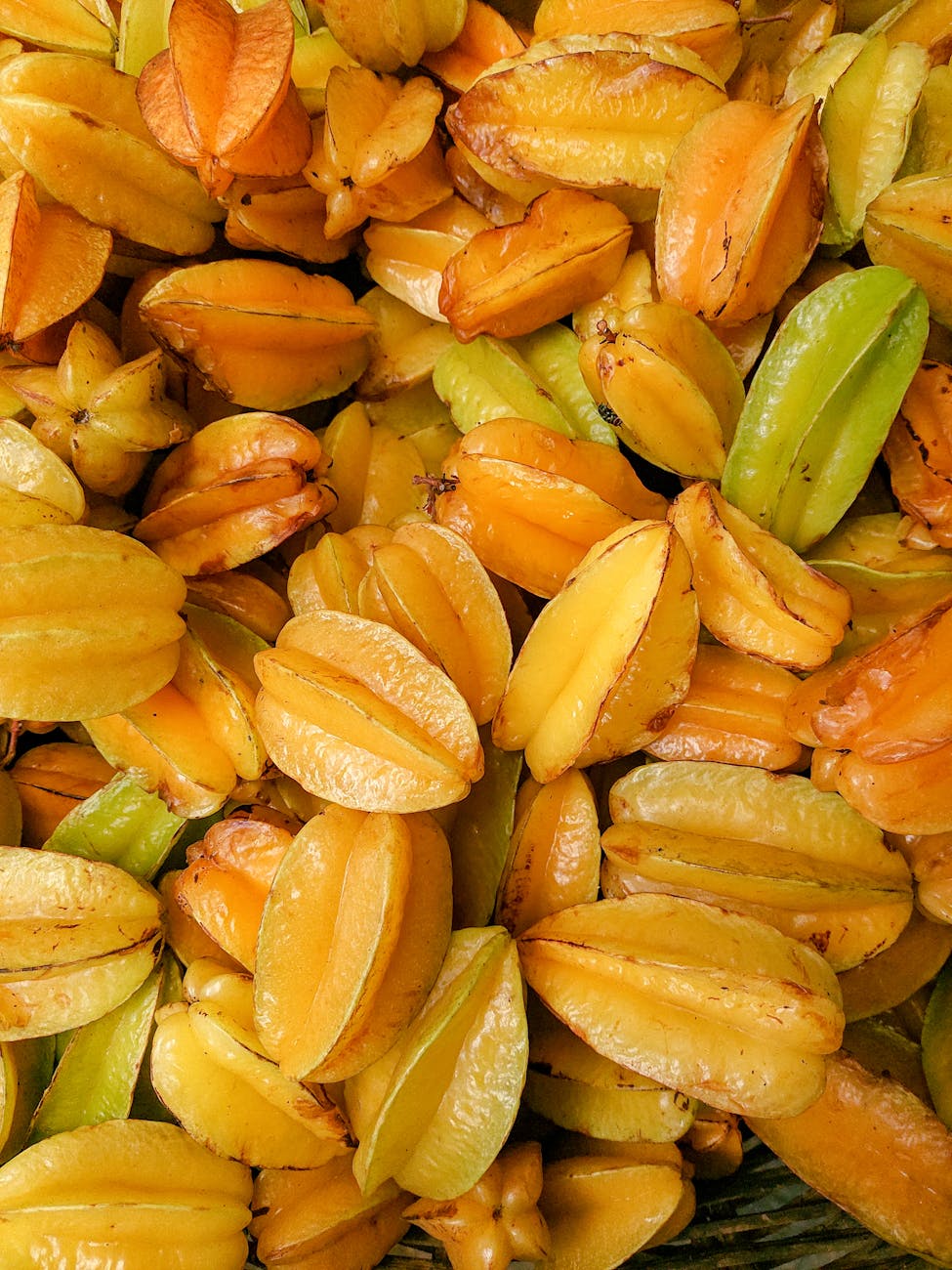
    Starfruit: How to Eat the Pretty (Weird?) Thing

    pile of starfruit
    Photo by Victor Cayke on Pexels.com

    One day we picked up a starfruit at the store because it was sitting there all tropical and self-important in the produce section. I’d seen them sitting there mocking me on previous trips to the store, but had no idea what to actually do with it. Do you peel it? Eat the seeds? Is it just decorative?

    Instead of a deep dive into Google, I asked AI:
    “How do you eat a starfruit?”

    That’s it. One simple question.
    In return, I got a calm, step-by-step response that told me to wash it, slice off the edges, and enjoy it raw, seeds and all—like it wasn’t some mysterious alien fruit.   And it did look like stars when I sliced it, who knew?!

    Bonus: It even told me how to tell if it’s ripe, which saved me from chomping into a sour science project.

    Cherimoya: The Ripeness Riddle

    chirimoya fruit
    Photo by Gilmer Diaz Estela on Pexels.com

    Next up: a Cherimoya. If you’ve never seen one, imagine a fruit that looks like a dinosaur egg and feels like a papaya having an identity crisis. We bought one because someone at a local Farmer’s Market called it “custard apple” and said it was their favorite fruit. We were intrigued. Then it sat on the counter for a few days while we poked it and wondered:
    “How do we know if this thing is ripe?”

    So I asked AI:
    “How do you know when a cherimoya is ripe?”

    Again—just that. No keywords, no scrolling through blogs with autoplay videos.
    And again, AI delivered. Soft to the touch, slightly browned skin, banana-meets-avocado texture on the inside. It even warned me not to eat the seeds (very appreciated, thanks)

    The Potato That Looked… Off

    And finally, the one that really had me nervously hovering over the trash can:
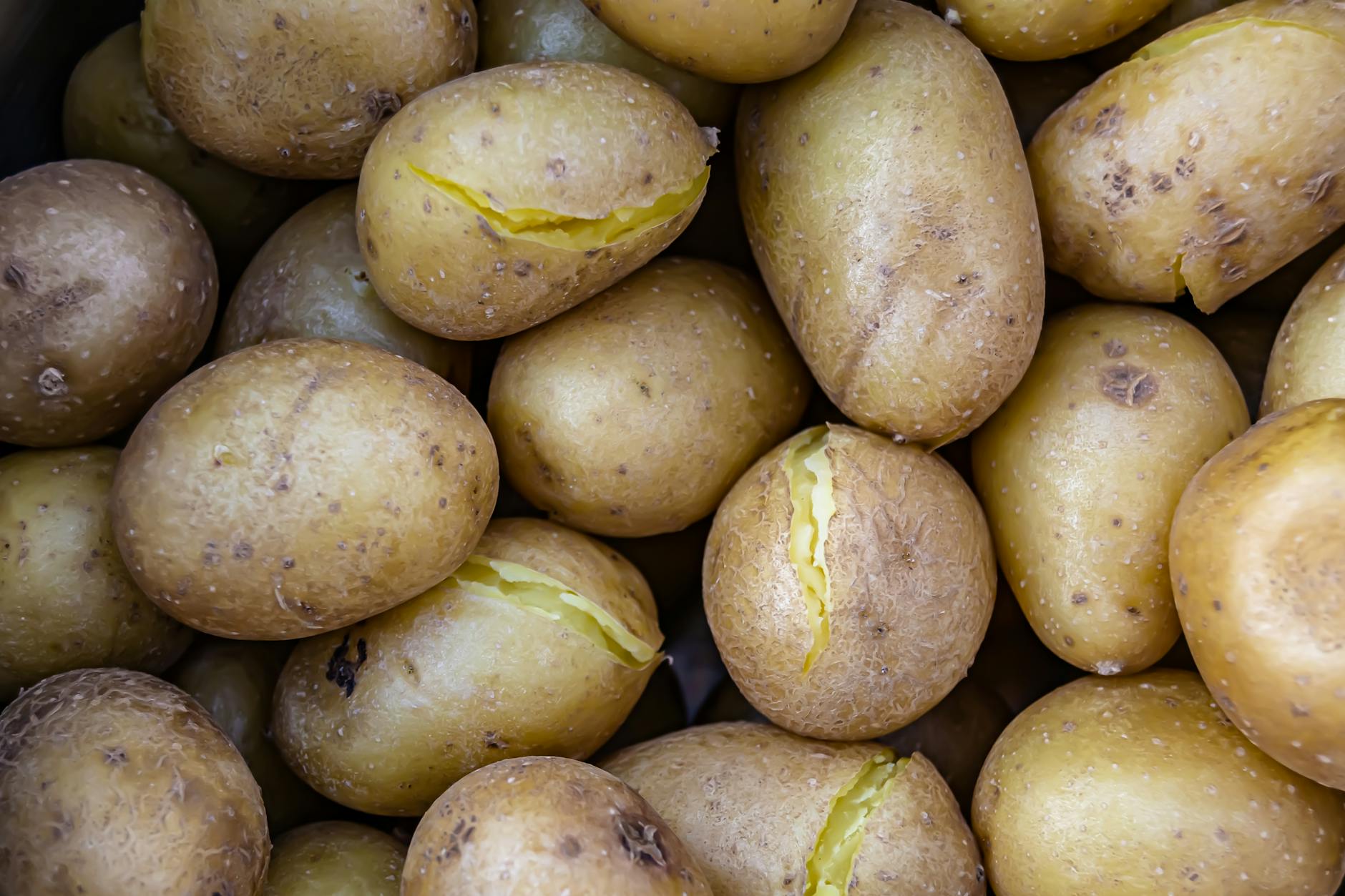
    “Is it safe to eat a green potato?”

    You’ve probably seen one—some weird green tint or patch on a potato you forgot in the pantry. I’d heard something somewhere about poison? But then again, people say the same thing about microwaving rice, so who knows.

    So I asked AI:
    “Is it safe to eat a green potato?”

    This time, AI did not sugarcoat it.

    “Green patches on a potato indicate the presence of chlorophyll, which usually means there may also be increased levels of a natural toxin called solanine. Solanine can cause symptoms like nausea, vomiting, diarrhea, and neurological issues if consumed in large amounts.

    It’s best to peel away green areas. If the potato is significantly green or has a bitter taste, it’s safest to toss it.”

    So… not deadly exactly, but definitely not the base of your next potato salad either.

    potatoes
    Photo by Oleh Korzh on Pexels.com

    What I Learned

    Sometimes the best prompt is the most obvious one.

    I didn’t need to scroll through a health blog, a food scientist’s dissertation, or someone’s life story about their trip to the farmer’s market in 2004. I just typed what I wanted to know, and boom—straight answers.

    If you’re new to using AI for cooking, start here.
    Ask the things that feel “too dumb to Google.”
    Ask about the weird produce. Ask about food safety. Ask about the difference between baking soda and baking powder again (because yes, I forget every time too).

    AI’s like that super chill friend who knows stuff, never judges, and doesn’t make you watch a 2-minute ad before answering.

    Up Next

    In my next post, I’m diving into what happened when I asked AI the age-old question:
    “What’s for breakfast?”
    Turns out, the answer was more interesting than I expected—and involved a lot fewer pancakes than I was hoping for.

    Stay tuned.

    Photo by Anna Shvets on Pexels.com